
As the world watches the 2026 FIFA World Cup unfold thousands of miles away, Nepal is quietly making moves of its own, not on a football pitch, but in the boardrooms and conference halls of Beijing.
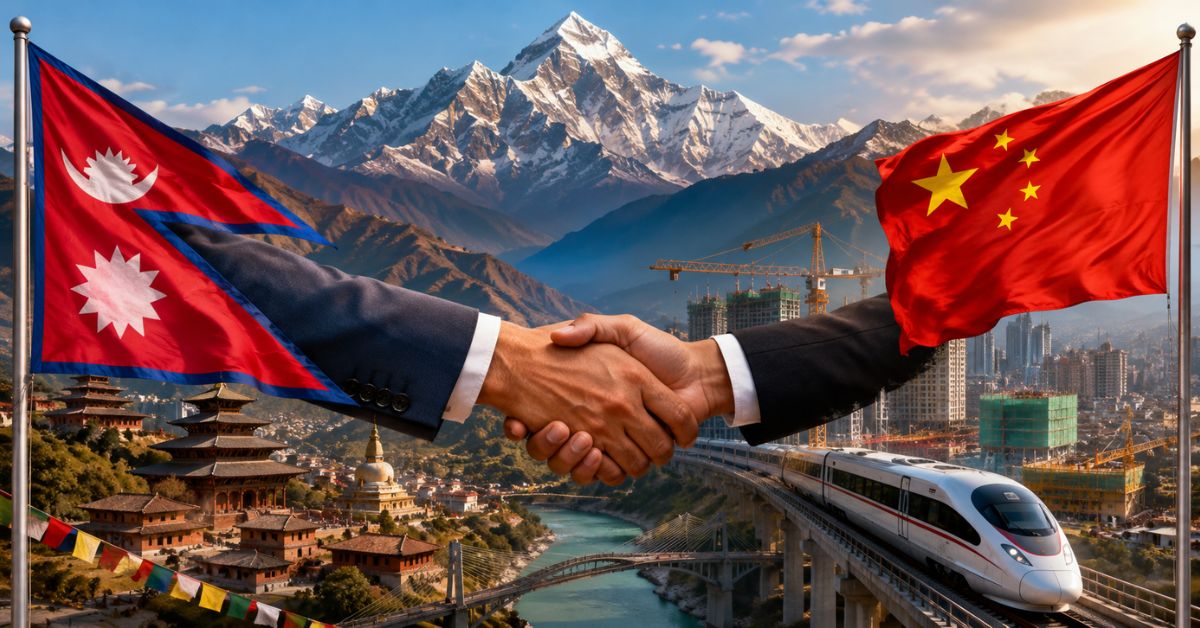
Nepal’s Foreign Minister has traveled to the Chinese capital to participate in an investment promotion conference organized by the Embassy of Nepal in Beijing. The visit marks one of the most targeted diplomatic efforts in recent memory, a deliberate, strategic push to attract Chinese capital into a Nepali economy that is hungry for growth.
Why Beijing, Why Now?
The timing is no accident.
Nepal’s economy is at a crossroads. According to the Nepal Rastra Bank, consumer inflation climbed to 5.04% during the tenth month of fiscal year 2025/26, a sharp rise from 2.77% the previous year. Food prices, transportation costs, and overseas education expenditure are all on the rise, placing growing pressure on ordinary Nepali households.
At the same time, Nepal’s heavy reliance on remittances, while a lifeline for millions of families, is creating structural vulnerabilities. A central bank report has warned that remittance dependency is quietly pulling workers away from agriculture and manufacturing, eroding domestic labor productivity over time.
The message is clear: Nepal needs investment, and it needs it in the right sectors.
What’s on the Table?
The investment conference in Beijing is not just a formality. It brings together Chinese business leaders, investors, and institutional players to explore concrete opportunities in Nepal, from hydropower and infrastructure to tourism and digital technology.
Nepal’s geographic advantages are hard to ignore. Nestled between two of Asia’s largest economies, India and China, the country sits on enormous untapped potential. Its Himalayan river systems offer some of the world’s most favorable conditions for hydropower generation, a sector that is growing in importance as global demand for clean energy surges alongside the rise of artificial intelligence, data centers, and digital infrastructure.
Nepali business voices at international forums have already been making this case. At the St. Petersburg International Economic Forum earlier this month, entrepreneur Upendra Mahato underscored Nepal’s capacity to not only meet domestic energy demand but to export electricity to India and Bangladesh, positioning Nepal as a regional energy hub.
The China Factor
China has been steadily deepening its footprint across South Asia, and Nepal is a natural frontier. The two countries share a long border and a growing web of economic, cultural, and diplomatic ties. The Belt and Road Initiative (BRI), to which Nepal is a signatory, has long promised infrastructure investment, though progress on major projects has been slower than many had hoped.
This latest visit signals that Kathmandu is not waiting. By proactively hosting an investment promotion conference through its own embassy, Nepal is putting itself in the driver’s seat, inviting Chinese capital on its own terms, in sectors that align with national priorities.
For China, too, Nepal presents an attractive proposition: a stable democratic partner, a gateway to South Asian markets, and a country increasingly open to foreign business engagement.
Challenges Ahead
Of course, optimism must be tempered with realism.
Attracting foreign investment is one thing, retaining it and deploying it effectively is another. Nepal has historically struggled with bureaucratic hurdles, policy inconsistency, and infrastructure gaps that have made even willing investors hesitate. The country’s non-performing loan ratio has climbed to 4.62%, up from just 1.3% in 2022, signaling stress in the banking sector that could dampen confidence.
There is also the delicate balancing act of Nepal’s foreign policy. As a landlocked nation sandwiched between India and China, Kathmandu has always had to walk a careful diplomatic tightrope. Deepening economic ties with Beijing will inevitably draw scrutiny from New Delhi and managing that relationship will require finesse.
A Step in the Right Direction
Despite the challenges, the Foreign Minister’s Beijing visit is a welcome and necessary move. It signals ambition. It signals urgency. And it signals that Nepal is ready to compete for its share of global capital.
The conference is not just about signing deals, it is about changing perceptions. Showing Chinese investors that Nepal is open, prepared, and serious. That behind the mountains and monasteries, there is a modern economy looking to grow.
If even a fraction of the conversations sparked in Beijing translate into real investment on Nepali soil, in hydropower, in roads, in technology, in tourism, the benefits could be transformative.
Nepal is making its pitch. The world is watching.